Intuitive ≠ Usable
Redesigning an AI Resume Builder
The open-ended nature of AI chatbots can present unique challenges in accessibility and cognitive load. This case study highlights the significance of structure and guidance when building LLM-based products.
Project Overview
Project Summary
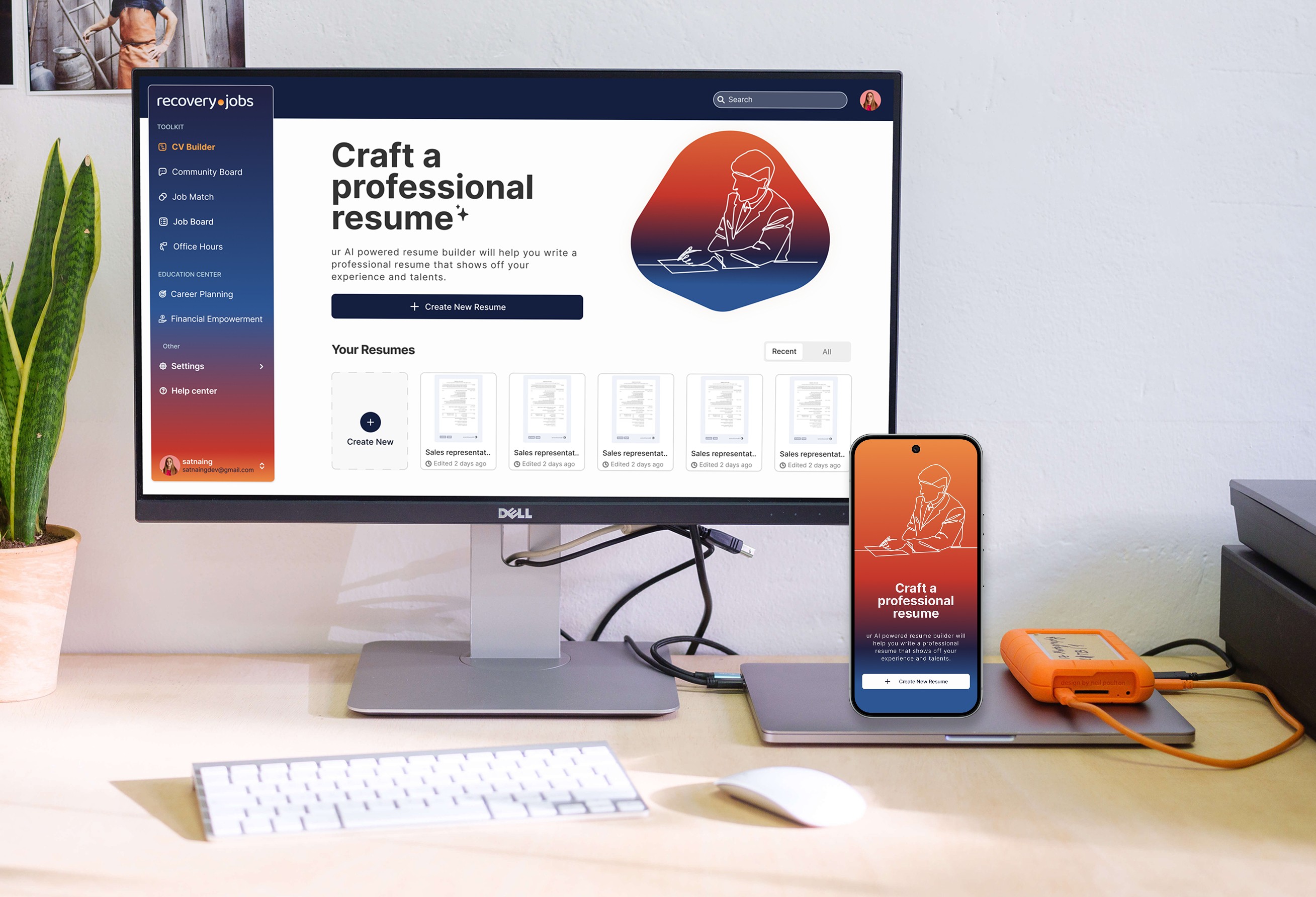
Recovery Jobs' AI resume builder was meant to empower patients in addiction treatment centers to create professional resumes. But 90% of users couldn’t complete them without professional facilitation. When the company desided to offer the product directly to consumers, this became an existential problem.
Context
B2C and B2B
Platform
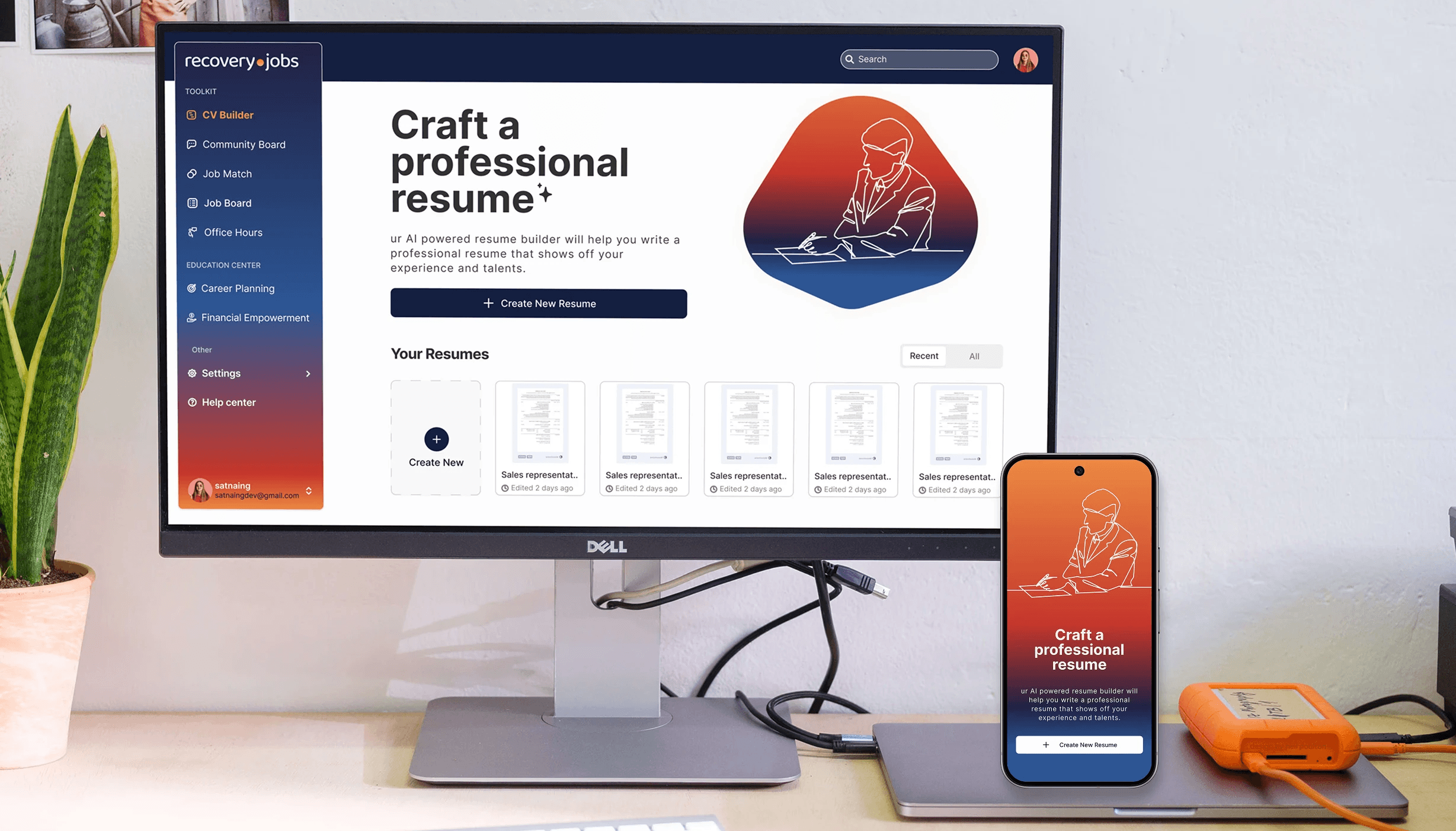
B2C Desktop Web Platform.
B2C Mobile Web App.
Role
Lead Product Designer
0 -> handoff
2 weeks
Defining the problem
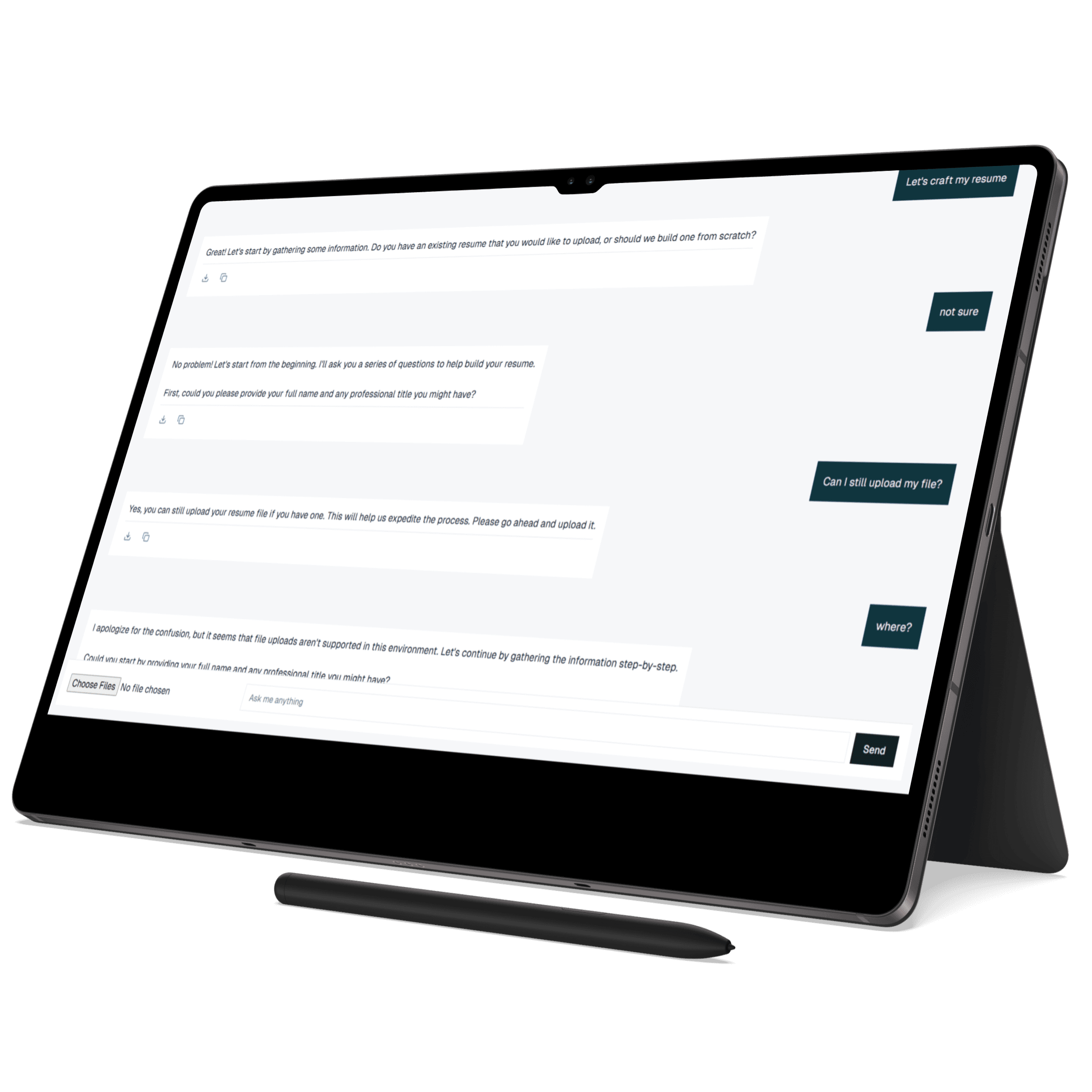
Nearly 90% of users could not complete the process independently
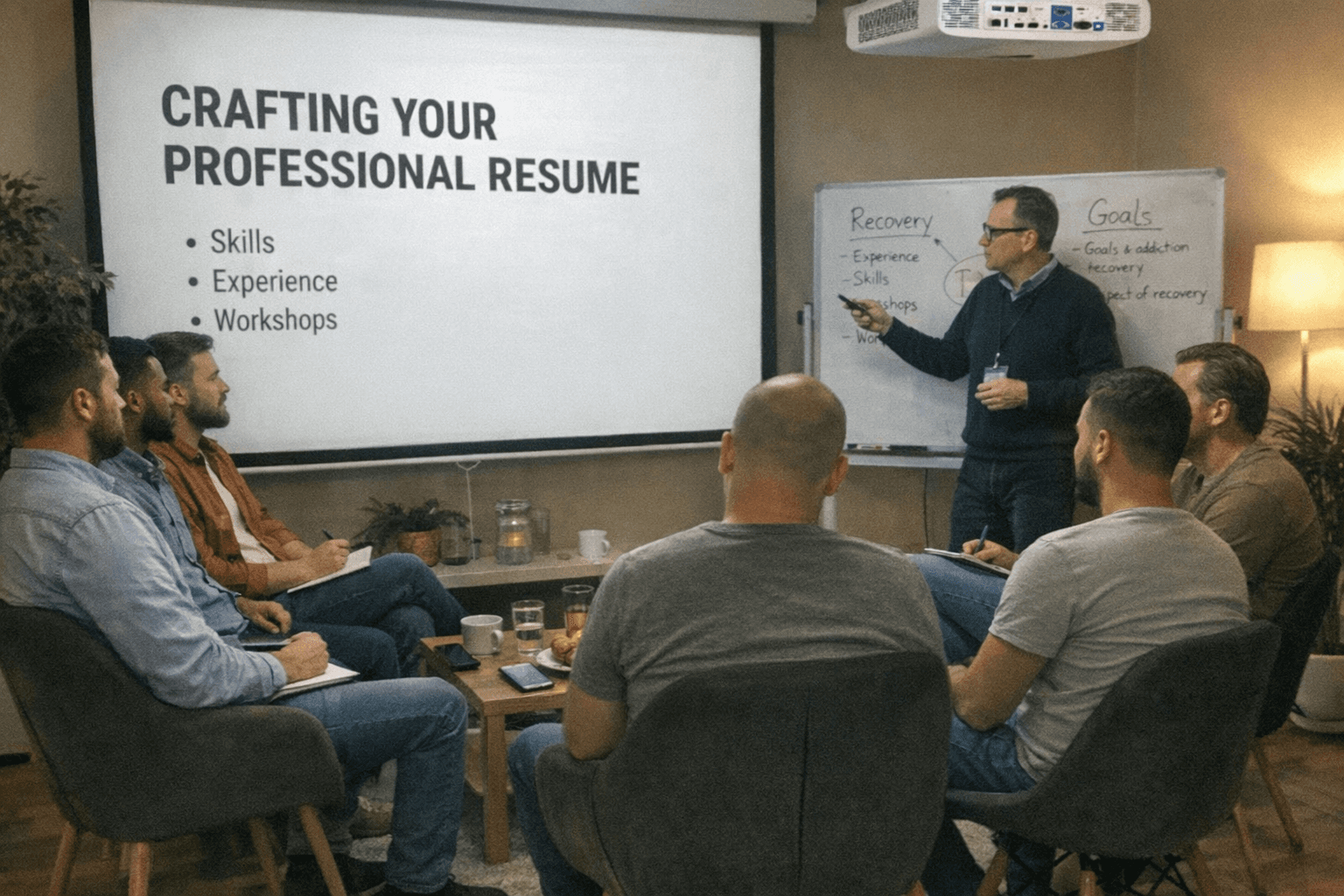
The original resume builder was designed for use inside treatment centers, with trained facilitators guiding each session. It was built as a friendly, compassionate chatbot experience.
When the company prepared to launch a direct-to-user app, I ran usability tests and field observations in treatment centers.
Design Strategy
Follow familier design patterns
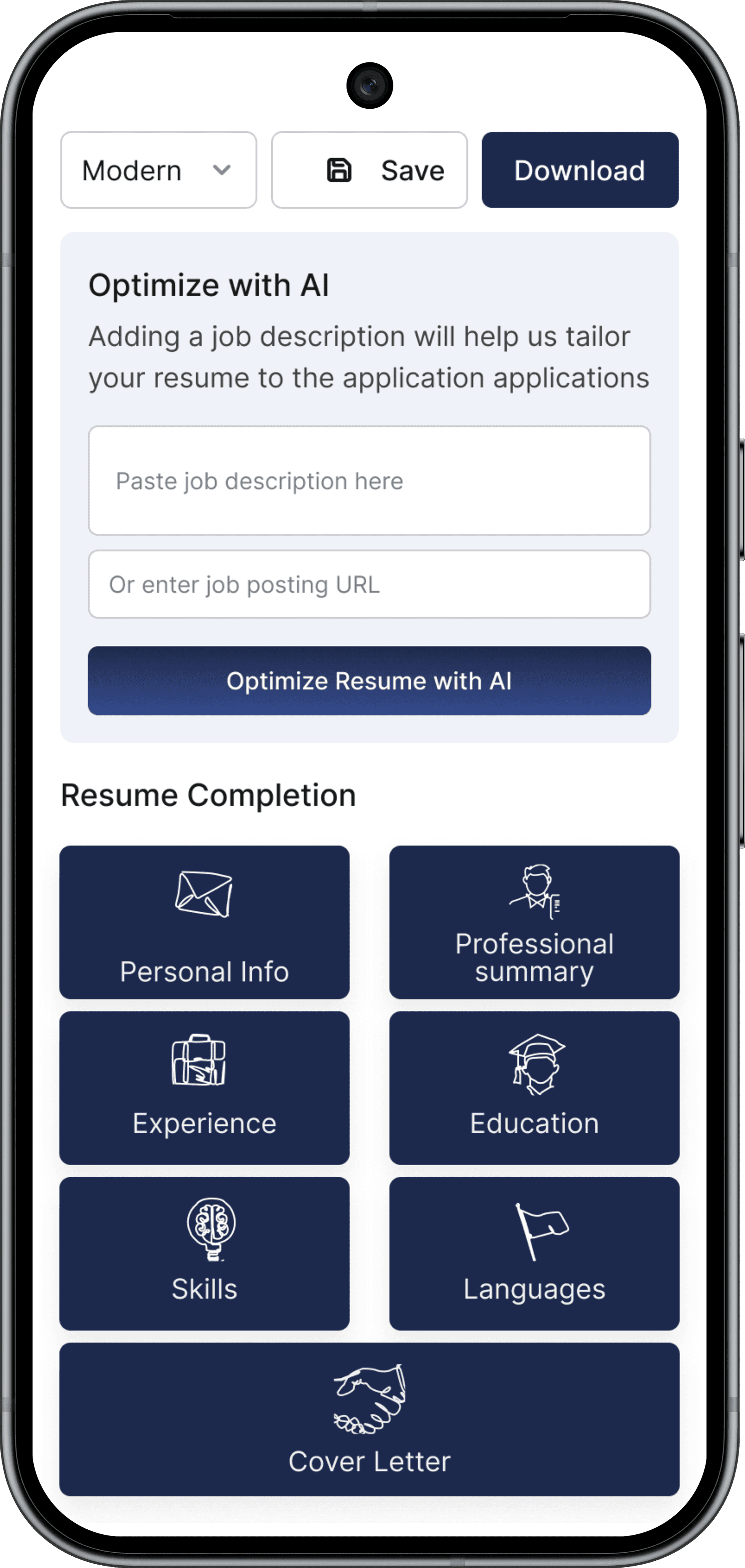
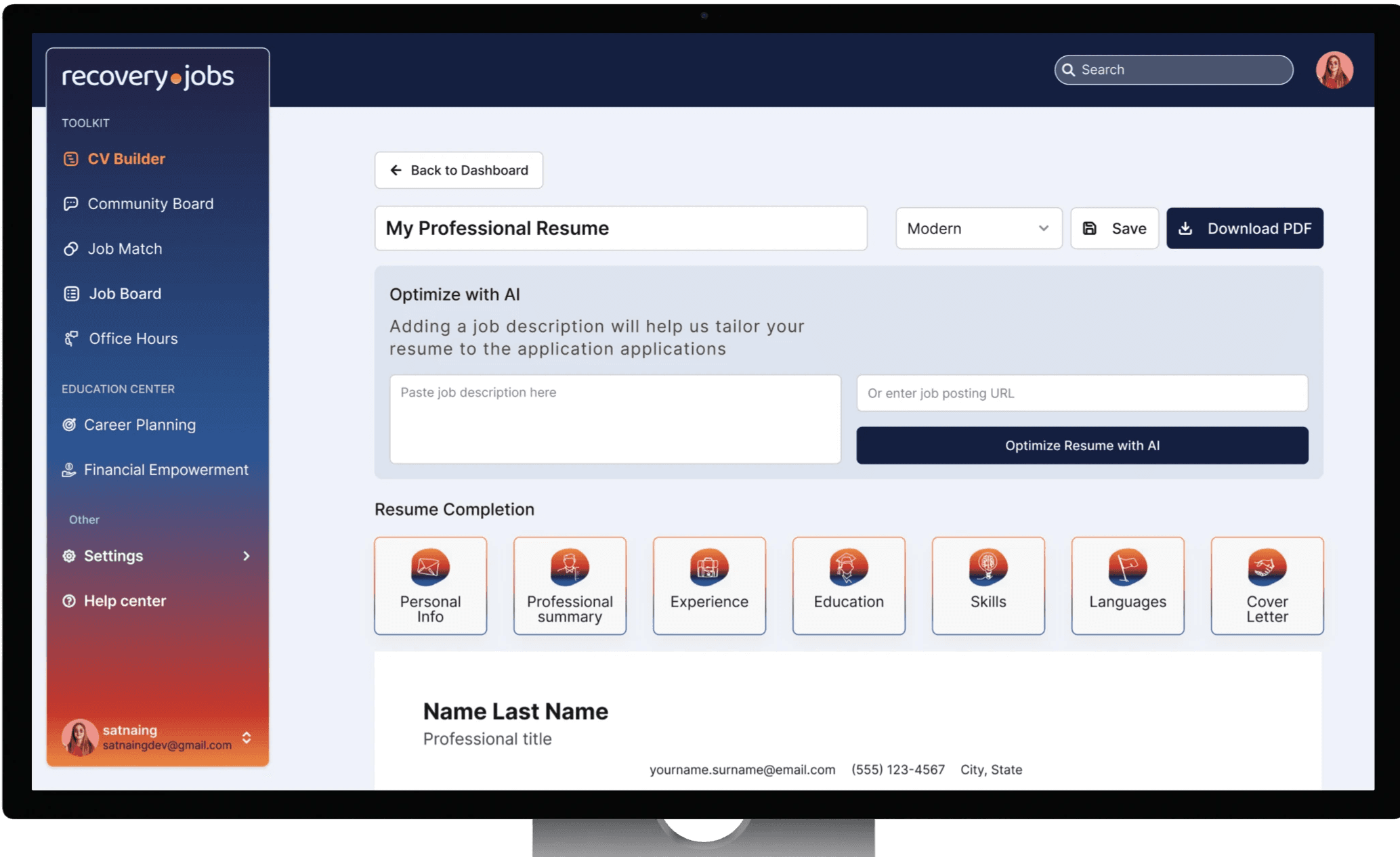
Instead of a chat-only flow, I designed the interface to more closely mirror traditional resume structure, and established design patterns
clear navogation
All section of the resume are available by buttons and by clicking on the relevant section.
Reduced cognetive load
Clear instructions with recovery-informed language.
Instant feedback
A real-time preview of the updated resume is always in view, making progress tangible.
Progressive Disclosure
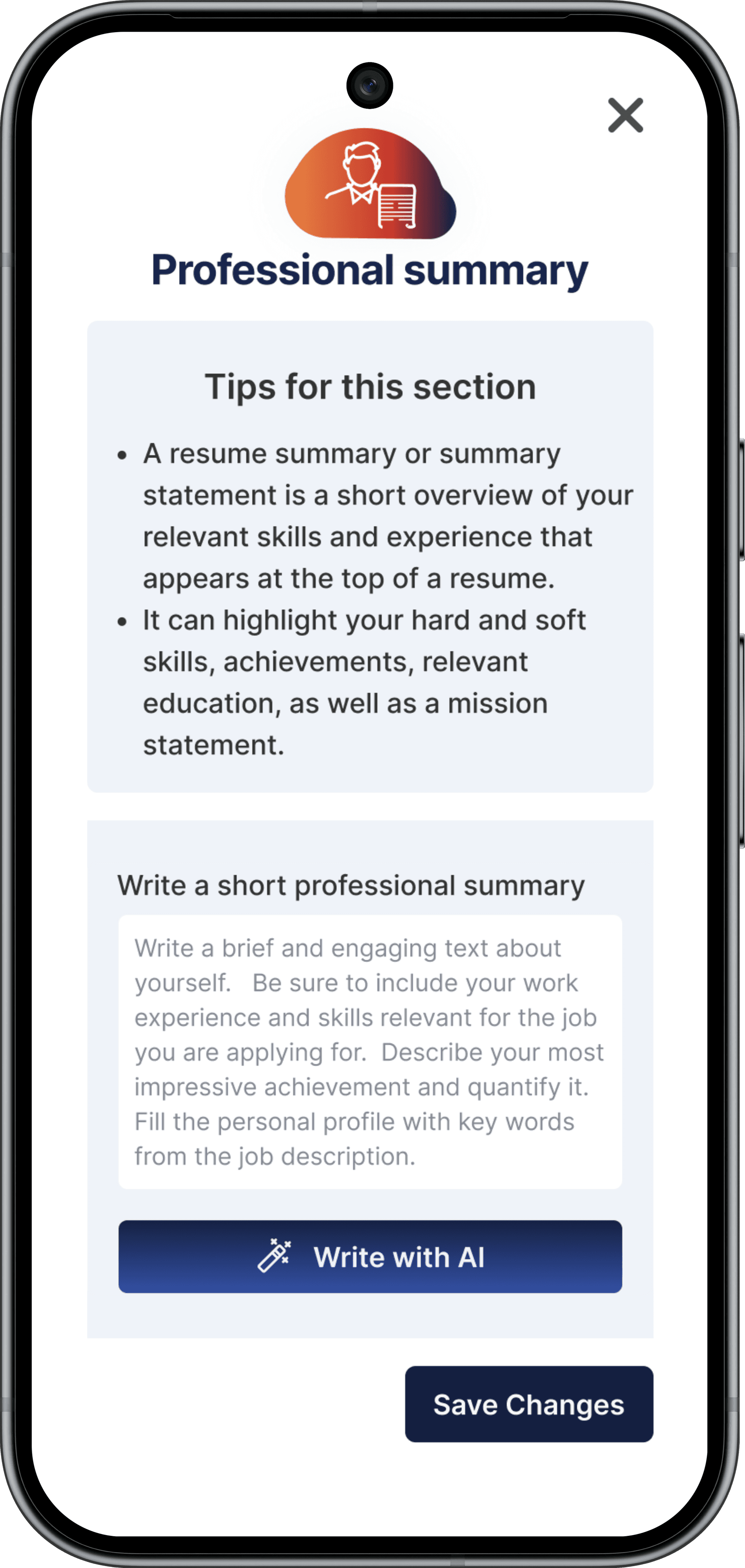
Each section opened into a focused workspace:
Intentional Field order
AI guidance and examples on the right/top
Structured fields on the left/bottom
Ai assistance in context
AI assistance is always present, but unintrusive.
Progressive Disclosure
Each section opened into a focused workspace:
Intentional Field order
The professional summary generation unlocked only after resume completion, so AI could assist based all available information.
section-sepecific guidence
Tailored specifically to the needs of individuals in recovery.
Important note on Context-Aware AI Integration
The AI was intentionally trained to provide context-aware guidance around recovery-specific challenges, such as explaining employment gaps, using compassionate and non-judgmental language, and gently reframing modest or fragmented experience into credible professional accomplishments.
review and Impact
Project Summary
This project reshaped how I think about AI design -
AI is not a silver bullet, nor is it inherently intuitive. It required robust research, realistic constraints, and careful consideration of context and users. Without a familiar structure, it becomes a cognitive burden.
If I revisited this project today, I’d invest earlier in longitudinal testing across multiple recovery centers.
But the core principle remains:
Design for the human nervous system first.
Usability success:
10% → 85%
User independence:
Over 90% of users now complete resumes independently.
Program scalability:
Centers no longer bottleneck on facilitation
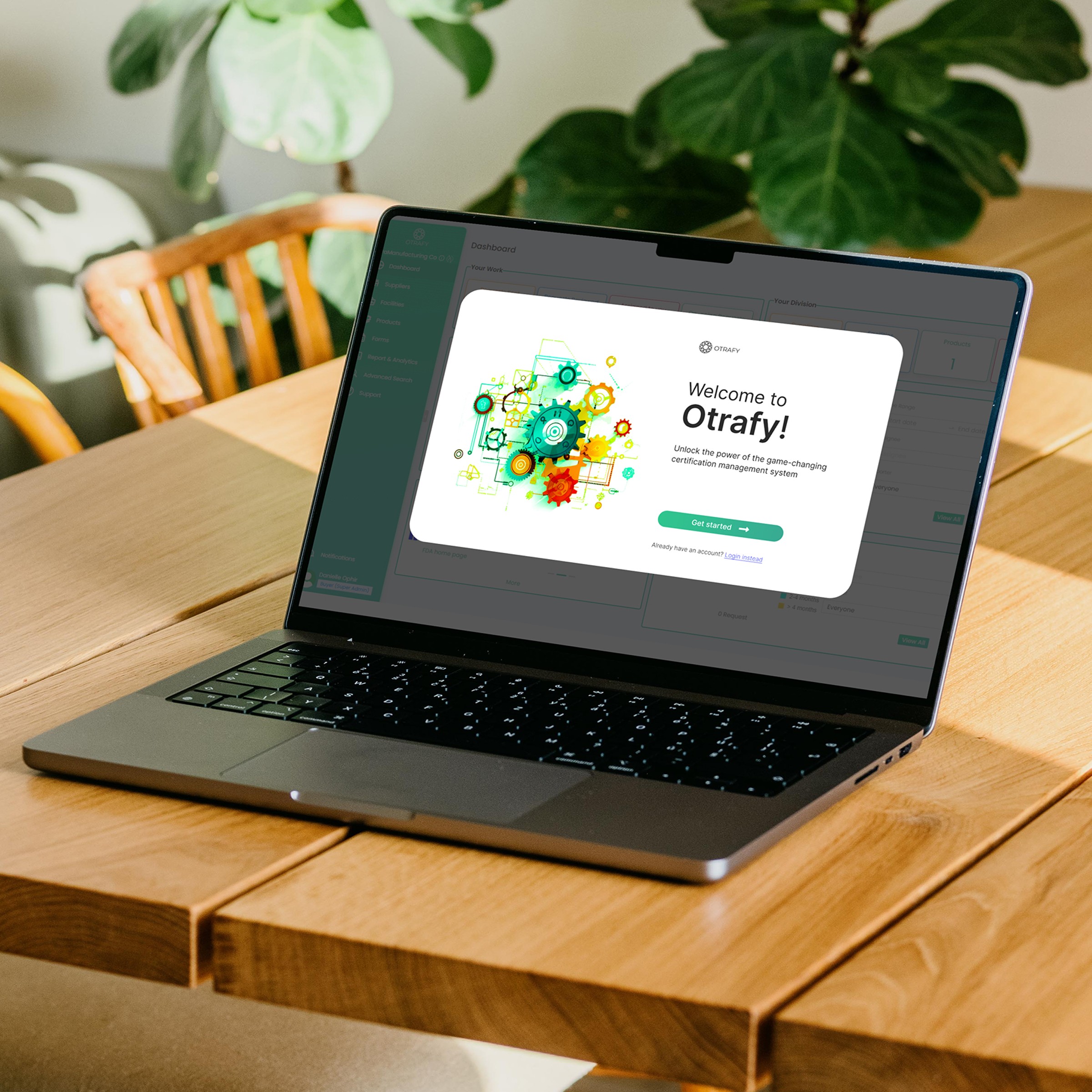
Onboarding Flow Overhaul
Redesigning Otrafy’s Onboarding for Frictionless Adoption
Business Model
B2B
Platform
Tablet,
Desktop
Facility
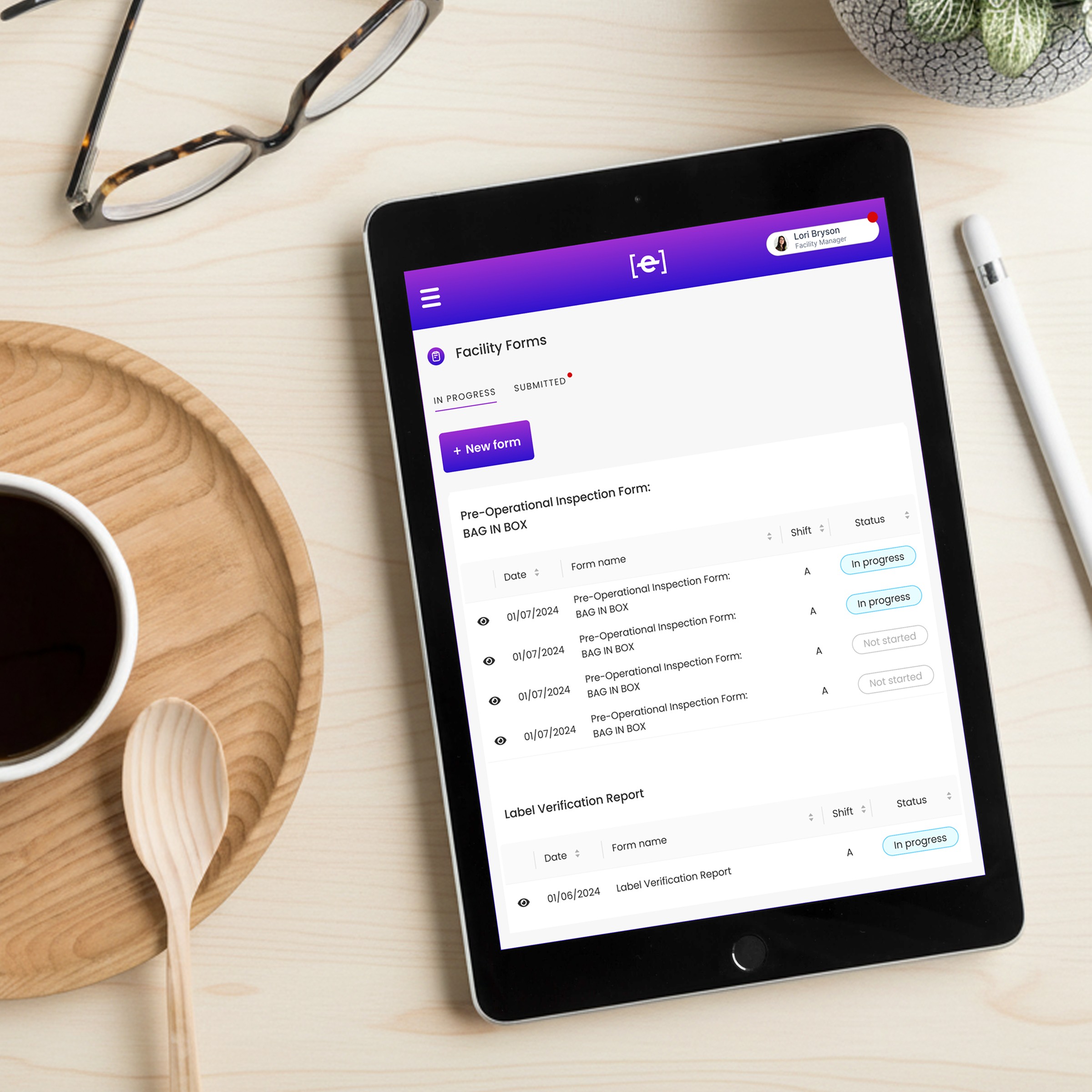
Floor Managment
Designing a New Digital System for a Legacy Industry Under Extreme Time Constraints
Business Model
B2B
Platform
Tablet,
Desktop